A pothole rarely feels political.
Neither does a cracked sidewalk, an aging traffic signal, a bridge repair or the snowplow that arrives after a Colorado storm.
Until, of course, we start asking who pays for them.
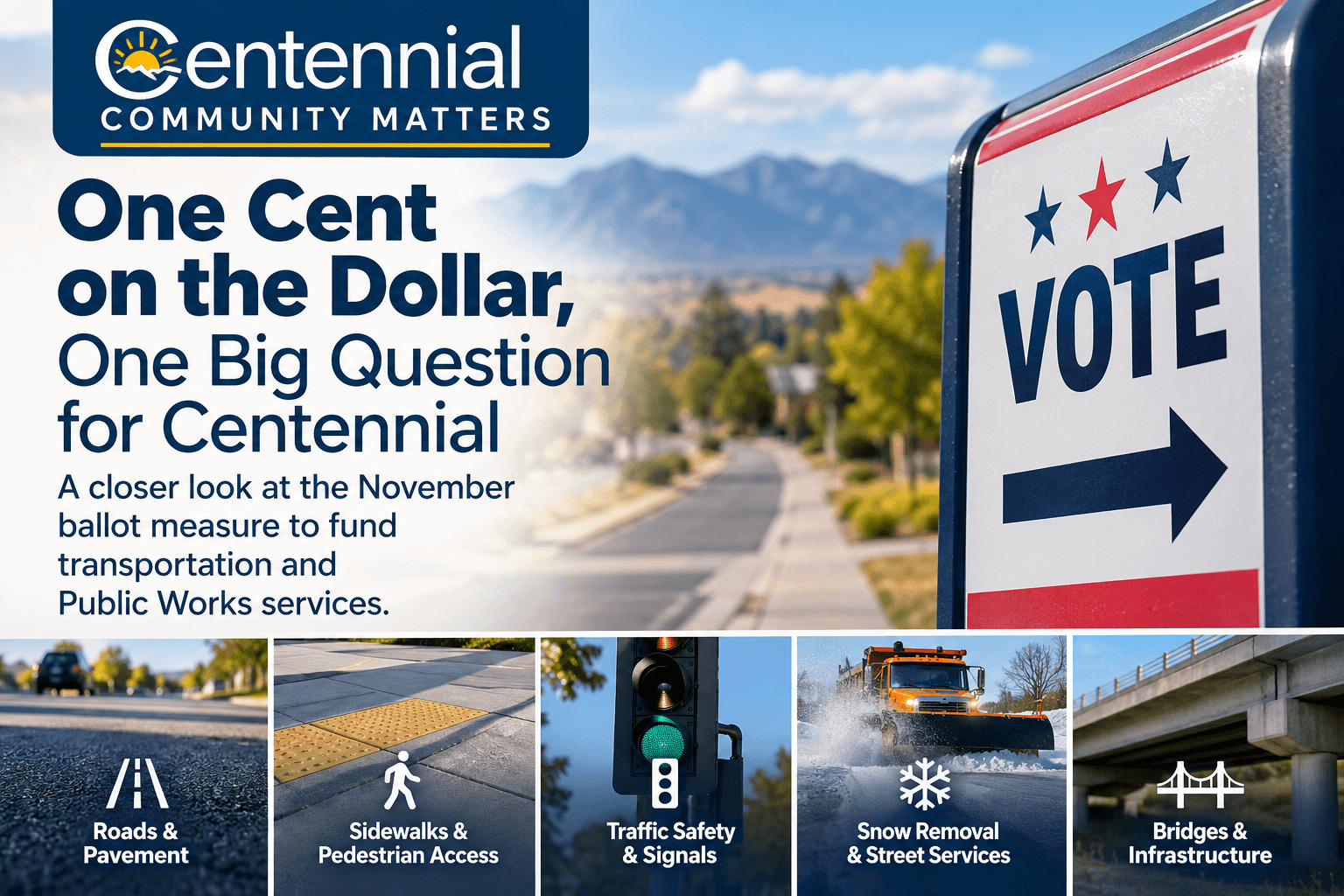
That question will be in front of Centennial voters on November 3, when residents decide whether to increase the City's sales and use tax by one percentage point, from 2.5% to 3.5%, with the additional revenue dedicated to transportation infrastructure and related Public Works services.
The proposal sounds simple enough.
One additional cent on every taxable dollar.
But behind that penny is a much larger conversation about what it costs to maintain a maturing city and how Centennial wants to pay for it.
What Is Actually Being Proposed?
If voters approve the measure, Centennial's municipal sales and use tax would increase from 2.5% to 3.5% beginning January 1, 2027.
The City estimates the increase would initially generate approximately $27 million per year.
The ballot language specifies that the additional tax would not apply to several categories, including food purchased for home consumption, gasoline and prescription drugs, along with certain other items excluded under Centennial's municipal code.
The revenue would be dedicated to Public Works-related transportation needs.
That includes things residents encounter every day:
road paving and pothole repair,
traffic-safety improvements,
bridge repair,
sidewalk and pedestrian-access improvements,
traffic signals and street lighting,
snow removal and street sweeping,
and larger transportation projects planned for the future.
So this isn't simply a "road tax."
It reaches much of the physical network that allows Centennial residents to move around the city.
Why Is the City Asking Now?
According to Centennial, the City's Street Fund currently receives about $15 million in dedicated annual revenue.
The City estimates that simply maintaining and operating its transportation infrastructure requires at least $35 million annually.
That leaves a gap of roughly $20 million or more every year.
For several years, Centennial has used General Fund savings and reserves to help fill that gap.
The City projects those resources could be exhausted by 2028 if the current funding structure continues.
At the same time, Centennial says construction costs are rising and infrastructure is aging. The City's broader transportation plans also contain approximately $100 million in identified improvements beyond routine maintenance needs.
That's the financial argument behind the ballot question.
But understanding why the City wants additional revenue isn't the same thing as deciding whether this particular tax is the right answer.
That judgment belongs to voters.
What Does One Percent Really Mean?
Percentages can become strangely slippery once they enter ballot language.
The simplest translation is the one written directly into the measure:
one additional cent for every taxable dollar spent.
That means the conversation isn't only about whether residents value better roads and infrastructure.
Most people probably do.
The harder question is whether residents believe an additional sales tax is the appropriate way to pay for those needs.
Some voters may focus on the condition of Centennial's roads, the long-term funding gap and the cost of delaying repairs.
Others may focus on household affordability, the cumulative effect of sales taxes or whether City spending priorities should be adjusted before taxes increase.
Those are legitimate questions on both sides of a ballot measure.
Community Matters isn't here to answer them for you.
It is here to make sure we're asking the right ones.
Where Would the Money Go?
The ballot language restricts the new revenue to Centennial's Street Fund and Public Works-related transportation services and improvements.
It specifically identifies traffic safety, pavement preservation, roadway reconstruction, aging infrastructure, bridges, sidewalks and pedestrian access among the intended uses.
The measure also requires the revenue and spending to appear in the City's annual independent audit, which is published publicly and reviewed by the Centennial Audit Committee and City Council.
That accountability piece deserves attention too.
If residents are being asked to contribute more, it is reasonable to expect clear reporting about where those dollars ultimately go.
Think Beyond Your Own Commute
Transportation discussions tend to begin with cars.
But Centennial's transportation network is much larger than the lane beneath your tires.
It is the sidewalk a child uses to reach school.
The curb ramp someone using a wheelchair needs to cross an intersection.
The signal that gives a pedestrian enough time to cross safely.
The bridge carrying thousands of vehicles each day.
The bicycle connection between neighborhoods.
The snowplow clearing a major roadway before the morning commute.
And yes, the pavement beneath all of them.
That doesn't automatically tell us how those systems should be funded.
It does remind us what we're actually talking about.
A Penny Is Small. Twenty-Seven Million Dollars Isn't.
Perhaps that is what makes this ballot question interesting.
At the cash register, the proposed increase is measured in pennies.
Across an entire city, those pennies are projected to become approximately $27 million every year.
Both numbers matter.
Before deciding, residents should understand not only what the tax would cost but also what happens if the current transportation funding gap continues.
Centennial has published information explaining the proposal, the Street Fund and the City's broader financial outlook. Centennial's November 2026 Sales and Use Tax Measure information
And that may be the real Community Matters question:
What level of infrastructure do we expect from the city we call home, and what are we collectively willing to pay to maintain it?
The ballot will give Centennial voters the opportunity to answer.


27 Comments
Join the conversation
Good to see the public gets to decide, not just city council. I’ll be paying attention to coming debates.
Don’t forget about street lighting! Some stretches are so dark at night, it’s not safe for walking or biking home.
Thank you for mentioning street lighting, it’s included among the Public Works services the proposed tax would support, recognizing how crucial safe, well-lit streets are for everyone.
Not thrilled about a tax increase, but if the city’s out of reserves by 2028, sounds like we don’t have many choices left.
Thank you for sharing your thoughts, it’s true that the city faces a tough financial crossroads if reserves are exhausted, and that’s at the heart of why this question is on the ballot.
A funding gap of $20 million every year seems like we didn't plan ahead. Where did the old budgets go?
Bridge repairs need to stay at the top of the list. Would love to see a published plan before it’s voted on.
Great point, bridge repairs are specifically mentioned in the proposal, and the City has published information outlining intended priorities and uses, which can help voters see what's planned.
If it actually helps with traffic signals and safety, I can support it. Too often I see broken lights and near misses.
It’s a penny on the dollar, but those pennies do add up. I’m leaning yes, but want to know how they’ll measure progress.
I moved here years ago and always thought Centennial’s roads were in better shape than other cities. Guess things change fast.
Appreciate that they broke down where the money is supposed to go. Feels more honest than some other ballot questions.
Amy F.Yeah, the details definitely help. Too many times we just get a “trust us” message. I hope they actually stick to what they promise here.
Let’s make sure the money actually goes to roads and bridges, not just city pet projects. Audits help but only if people pay attention.
I get that infrastructure is important, but sales tax hits folks with less money the hardest. Shouldn’t there be a different way?
Glad snow plowing is included. After last winter, I don’t want to risk waiting days for clear roads again.
My kid bikes to school and the sidewalks along the main road are awful. Voting yes if it means fixing that.
I’m on the fence. Nice to see audit requirements for transparency, but will that really keep spending in check?
$27 million sounds huge until you look at what it takes to keep roads maintained. If we let them crumble, it’ll just cost us more later.
You're absolutely right, maintenance costs only go up when delayed, and the article highlights that postponing repairs could widen Centennial’s funding gap even further.
Seems like taxes keep inching up year after year. I think the city should look at spending less elsewhere first.
I want safer streets for everyone, not just drivers. Glad to read about curb ramps and pedestrian crossings being included.
That’s a pretty big gap for city funding. Kinda surprised we’re that far behind on infrastructure.
Sidewalk repairs are so overdue. My street’s been cracked for years. I’d pay a cent for that to finally get fixed.
I wish we could see a breakdown of what all $27 million would go to exactly. More details would make me feel better about voting yes.
I like that the tax won’t be on groceries or gas. At least they’re not trying to hit everyday essentials.
I get that roads and sidewalks need fixing, but groceries already cost more these days. I'm not sure another tax is the best answer right now.