

A Thanksgiving Practice Run: Five Kitchen Habits to Try This Week |
Thanksgiving is Nov. 26, and this week is a good time for a kitchen practice run. Five CDC-based habits cover cleaning, separating raw foods, handwashing, cooking temperatures and chilling. |
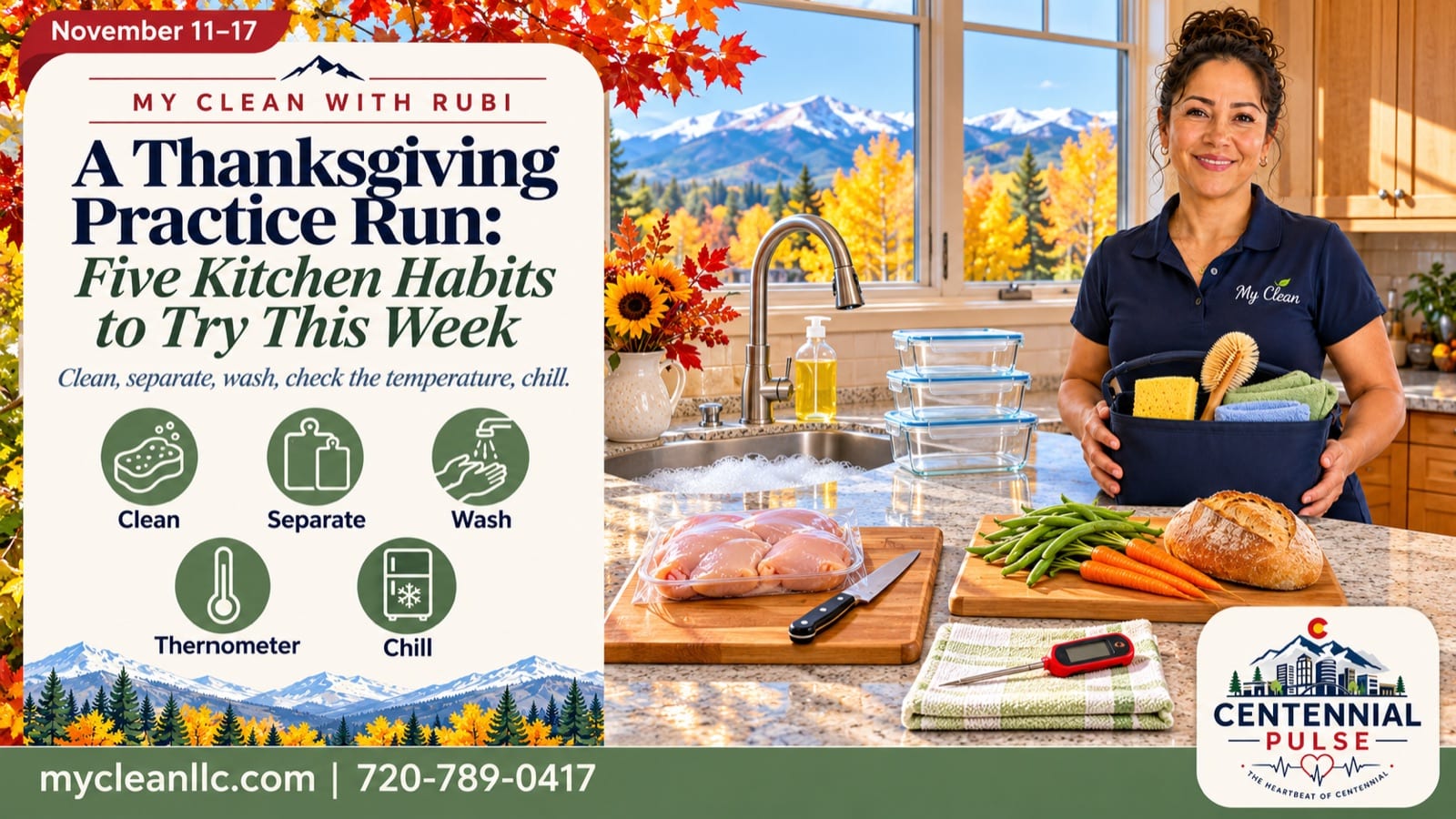
Thanksgiving is Thursday, Nov. 26, which makes this week, Nov. 11 through 17, a good low-pressure window for a practice run. Skip the deep clean for now. Instead, try out the kitchen habits you'll want on the big day while the stakes are only a weeknight dinner.
A quick note on where these tips come from: Rubi didn't supply material for this week's column, so every tip below comes from cited references. Most of it comes from the CDC's Preventing Food Poisoning guidance, which is built around four steps: Clean, Separate, Cook and Chill.
The five tips
1. Clean as you go, one food at a time. (From cited references: CDC)
Wash utensils, cutting boards and countertops with hot, soapy water after you prepare each food item, not just at the end of the night. Hot, soapy water is all this step asks for. Our standing safety rule in this column: never mix cleaning products. If you reach for a cleaner, use one product by itself and follow its label.
2. Give raw foods their own board. (From cited references: CDC)
Use one cutting board or plate for raw meat, poultry and seafood, and a separate one for produce, bread and anything else that won't be cooked. In the fridge, keep raw meat, poultry and seafood in sealed containers or wrapped securely so juices can't leak onto other foods. The CDC also notes that raw chicken doesn't need washing, because rinsing it can spread germs to other foods, the sink and the counter.
3. Wash hands at the moments that matter. (From cited references: CDC)
Wash before, during and after preparing food, and before eating. Always wash after handling uncooked meat, poultry, seafood, flour or eggs. Scrub with soap for at least 20 seconds. Warm or cold water both work.
4. Let a thermometer settle the debate. (From cited references: CDC and FoodSafety.gov)
The CDC says a food thermometer is the only way to tell if food is safely cooked. All poultry, including ground turkey, should reach 165°F, and so should leftovers and casseroles. The FoodSafety.gov temperature chart is a handy page to bookmark. If you don't own a thermometer yet, this week is a calm time to pick one up and test it on a regular dinner.
5. Plan the chill before the meal. (From cited references: CDC)
Refrigerate perishable food within 2 hours, or within 1 hour if it's above 90°F. The "Danger Zone" is 40°F to 140°F. Keep your refrigerator at 40°F or below and your freezer at 0°F or below. Divide hot food into several clean, shallow containers before it goes in the fridge. And for anything frozen, thaw it in the refrigerator, in cold water or in the microwave, never on the counter.
Why start now
Habits are easier to build on an ordinary Wednesday than on a holiday morning with a full house. Try the two-board setup and the clean-as-you-go rhythm on a couple of dinners this week, and you'll find the spots where your kitchen works against you: the board that's always in the dish rack, the missing thermometer, the shortage of shallow containers. If your fridge is already crowded, our recent 15-minute fridge reset pairs well with tip 5.
The takeaway
Write these five tips on a card and tape it inside a cabinet door. Clean, separate, wash, check the temperature, chill. Practice them once or twice this week, and Thanksgiving will feel a little more familiar when it arrives. |
13 Comments
Join the conversation
Is it just me, or does anyone else not trust cold water for thawing? I’ll stick to doing it in the fridge now after reading this.
I use a thermometer for everything now, but my mom always just poked it and guessed. Cooking has changed a lot!
I feel weird throwing hot food straight in the fridge but if the CDC says so, I guess it’s safe. Thanks for clearing that up.
The shallow containers are a good idea. My Tupperware is all way too deep and leftovers take forever to cool.
Why do they say not to mix cleaning products? Is it just for odors or is it dangerous?
Every year I end up with leftovers sitting out for too long because we all start talking after dinner. Setting a timer for the fridge this time.
Writing the tips on a card and sticking them in the cabinet is actually smart. I forget half this stuff once I’m cooking.
I already use two cutting boards but never remember to wash my hands between steps. More soap, here I come.
That’s a great start! Washing hands at key steps really does make a big difference in reducing the spread of germs, your effort is worth it.
Did not realize thawing on the counter was a no-no. Makes sense now. Guess I’ll be planning a day ahead for frozen stuff.
Love the idea of practicing these tips on a regular dinner first. Less stressful that way, for sure. Might try doing the fridge reset this weekend too.
I’m always lazy with the thermometer but my turkey last year was dry, so maybe this year I’ll actually use one. Didn’t know that 165 is for casseroles too.
The tip about not washing raw chicken always throws me off. Feels weird but I guess it’s true. I need to remember to just pat it dry and leave it at that.