

Wrap Young Tree Trunks Now to Head Off Winter Sunscald |
CSU Extension says sunscald hits young, thin-barked Colorado trees from December through March. If you haven't wrapped yet, here is how to do it this week and when to remove it. |
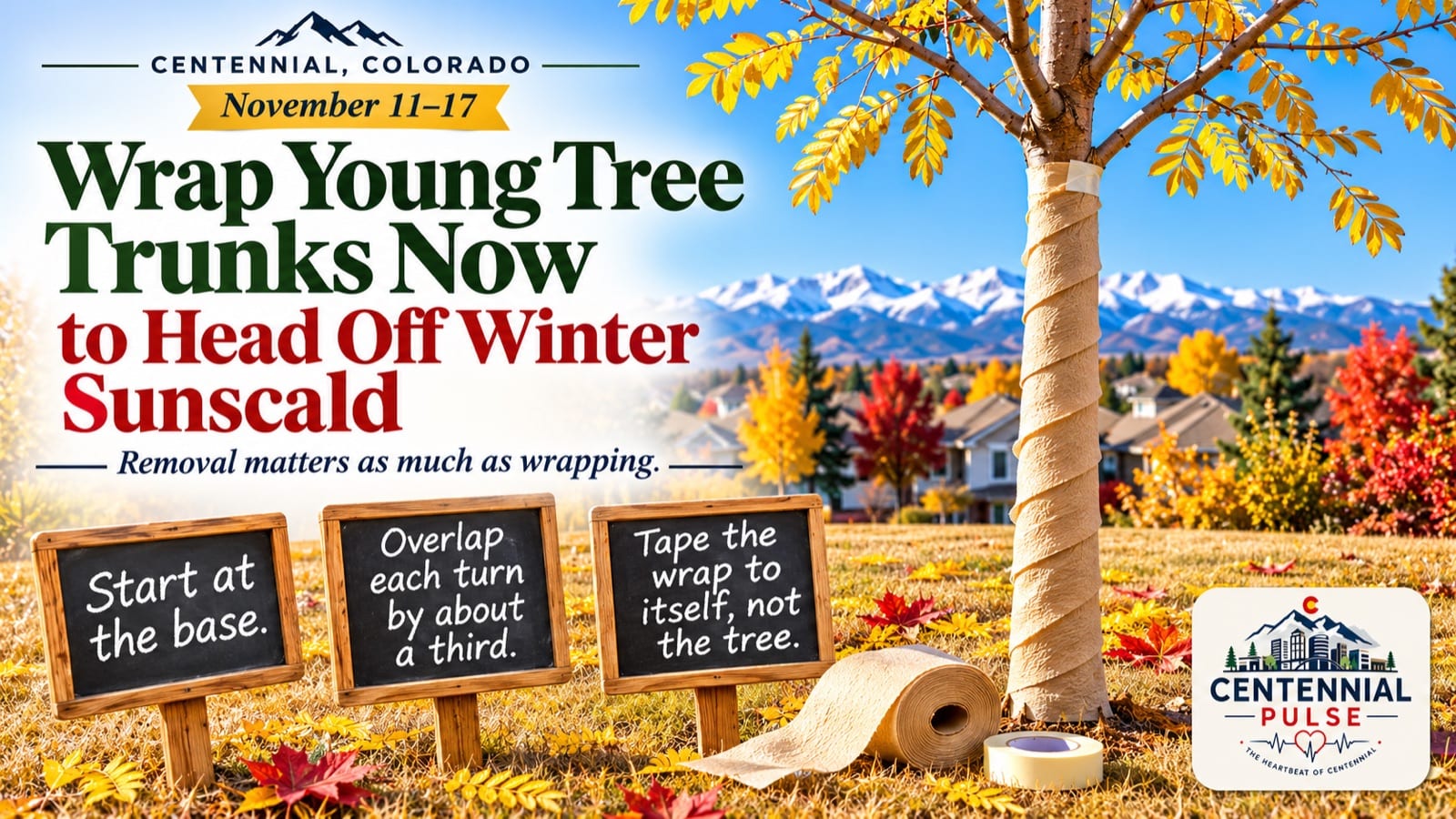
If you planted a honey locust, maple or fruit tree in the last few years, its trunk could use one more fall chore before winter settles in. Colorado State University Extension's PlantTalk Colorado says sunscald, often called southwest injury, primarily strikes Colorado trees from December through March. CSU suggests wrapping in late October or early November. If the week of Nov. 11 finds your young trees still bare-trunked, this is the week to catch up.
What sunscald actually is
On a clear winter day, intense sun at a low angle heats the south and southwest side of a deciduous tree's trunk. That warmth coaxes bark cells out of dormancy. When temperatures fall below freezing after sunset or with a change in weather, those newly active cells and the conductive tissue beneath them die.
You won't see the damage right away. CSU says it can show up later as sunken, discolored bark that may crack or fall off in patches, exposing dead tissue. It most often appears on the southwest side of young trunks. CSU also notes that sunscald is less frequent in places with cloudy, sunless winter days, which helps explain why it is a Colorado concern.
Which trees need it
Young, thin-barked deciduous trees face the highest risk. CSU names these:
Honey locusts
Fruit trees
Ashes
Oaks
Maples
Lindens
Willows
How to wrap, step by step
CSU describes commercial crepe-paper tree wrap as effective because it insulates the bark. Here is its method:
Start at the base. Wrap upward from the ground.
Overlap each turn by about a third. CSU puts it at roughly 33 percent.
Stop just above the lowest branches.
Tape the wrap to itself, not the tree. Secure the end with tape, but don't let the tape stick to the bark.
Know when to take it off
Tree wrap works like a winter coat. It isn't meant to stay on all year. CSU says to remove both the wrap and the tape the following April to avoid girdling and possible insect damage. Plan on repeating the routine each winter for several years, until the bark thickens and becomes less prone to damage.
What about painting trunks white?
Orchardists sometimes whitewash or paint trunks white to reflect winter sunlight. CSU says that works, but it looks more at home in an orchard than in an urban landscape. For most Centennial front yards, crepe-paper wrap is the tidier choice.
The takeaway
Walk your yard this week and look for any young, smooth-barked deciduous tree, especially one with a trunk that faces open southern or southwestern exposure. Wrap it from the base to just above the lowest branches, overlapping as you go and keeping tape off the bark.
Before you put the roll away, set a calendar reminder for April so the wrap comes off on time. Removal matters as much as wrapping. For more detail, CSU's PlantTalk page on sunscald is a good one to bookmark. |
9 Comments
Join the conversation
We’ve always wrapped our young maples, thanks to my grandma’s advice. Never had sunscald issues!
Should’ve read this last winter. My little linden lost a big chunk of bark. Hoping it recovers this year.
In my experience, you gotta use the real tree wrap, not just burlap or random cloth. Did that one year and got bugs.
Does anyone know if this works for evergreen saplings too? Or just the kind listed?
Interesting about painting trees white. I’ve only seen it in photos from orchards, never thought about trying it here.
I usually forget to take the wrap off in spring. Setting a calendar alert this time like you mentioned.
I always wondered why some people put that paper stuff around their trees. Makes a lot more sense now with our crazy Colorado winters.
Thanks for the tip! I just planted a honey locust and didn’t know about sunscald at all. Glad I can still get it protected in time.
You're right on time! Wrapping your honey locust now will give it a great head start through the winter, and you can revisit each fall until the bark thickens.